

The accountants winning new clients today are not necessarily the largest firms or the lowest-priced providers. They are the professionals who consistently show up, answer common questions, explain tax changes, and share practical financial advice before someone is actively looking to hire an accountant.
Whether you're an independent accountant, a CPA, or part of an accounting practice, social media has become one of the most effective ways to build credibility and stay top of mind. By regularly sharing insights on tax planning, IRS updates, filing deadlines, bookkeeping, and financial best practices, you demonstrate expertise and earn trust over time.
When a business owner or individual finally needs professional accounting services, they're far more likely to choose the expert they already recognize.
Why Social Media Matters
Accounting is built on trust. Clients share private financial information and rely on your judgment to help them make important financial decisions. As the International Federation of Accountants (IFAC) notes, maintaining public trust is fundamental to the accounting profession. That makes your online presence more important, not less.
When a potential client finds an inactive Facebook page, an outdated LinkedIn profile, or a feed full of random holiday posts, it creates doubt. They may not say it, but they notice.
For accountants and accounting firms, social media works best when it does three things:
- Shows that you are active, knowledgeable, and professional
- Helps clients understand important financial topics
- Builds trust before someone ever picks up the phone or sends an email
This does not mean you need to become an influencer. Accountants do not need viral dances or trending memes. Your competitive advantage is credibility and clarity.
A CPA who explains a confusing IRS notice in plain English often provides more value than a highly polished motivational post. The goal is not to go viral. The goal is to become the accountant people already trust when they need professional advice.
The Benefits: Brand Awareness, Trust, and Better Clients
Social media helps accountants grow in a slower, more practical way than many paid campaigns. It builds familiarity over time.
A business owner may not need a new CPA today. But after seeing your posts for months, they may remember you when their current accountant stops responding, when they open a new entity, or when tax season becomes stressful.
The main benefits are straightforward:
- Brand awareness: More people recognize your firm name and expertise.
- Client education: Your posts reduce confusion around taxes, payroll, bookkeeping, and compliance.
- Trust building: Repeated, useful advice makes your firm feel more credible.
- Referral support: Your profiles help validate recommendations.
- Better-fit inquiries: Niche content attracts clients who understand what you do and why it matters.
Pew Research Center’s 2025 survey found that 84% of U.S. adults use YouTube, 71% use Facebook, and 50% use Instagram. Your clients are already using social platforms, and your firm should be easy to find where it makes sense.
A small CPA firm I worked with had a simple problem. Referrals were coming in, but the social pages looked abandoned. We focused on weekly LinkedIn and Facebook posts around deadlines, business-owner mistakes, and advisory services.
Choosing the Best Social Media Platforms for your business
For most accounting firms, LinkedIn and Facebook are the best places to start. Instagram can work for simple visual education. YouTube is useful for deeper educational content.
For accountants who work primarily with businesses and professionals, LinkedIn is often the social platform where expertise carries the most weight.
It works well for sharing CPA expertise, tax planning insights, business finance tips, payroll reminders, niche accounting advice, thought leadership, and employer branding.
LinkedIn posts do not need to be complicated. A short post explaining what business owners should review before year-end can outperform a long technical article. Explain the issue, why it matters, and what the reader should ask their accountant.
Want some inspiration? Here are a few accountants doing LinkedIn well:
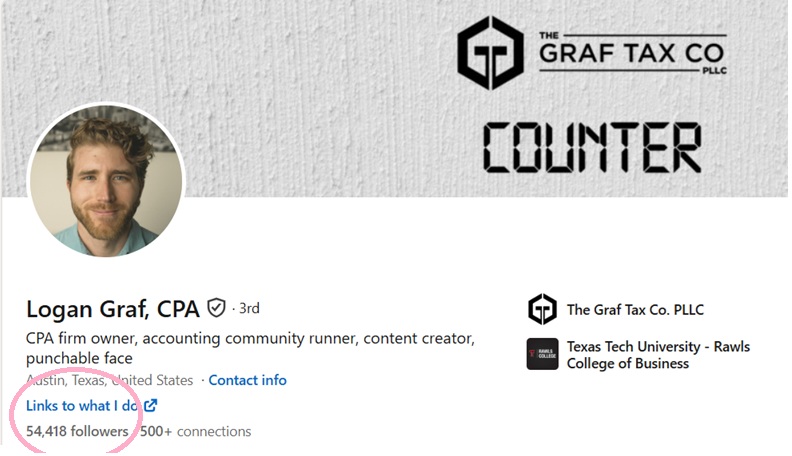
Logan Graf, CPA. Logan content proves that accountants do not need polished corporate branding to succeed—sharing honest stories about running a firm, pricing, and everyday business decisions often creates far more engagement than posting tax deadlines alone.
Kelly Rohrs, CPA. Kelly consistently turns complex tax and financial topics into simple, opinion-driven posts that spark conversation, showing that educational content performs best when it challenges common assumptions rather than just explaining regulations.
Facebook is still useful for local accounting firms, family-owned practices, and firms serving individuals or very small businesses.
It works well for local visibility, deadline reminders, community updates, client education, seasonal tax posts, and firm announcements.
Facebook is especially useful for local business owners, families, retirees, and self-employed professionals. The mistake to avoid is posting only during tax season. If you disappear for months, your audience disappears too.
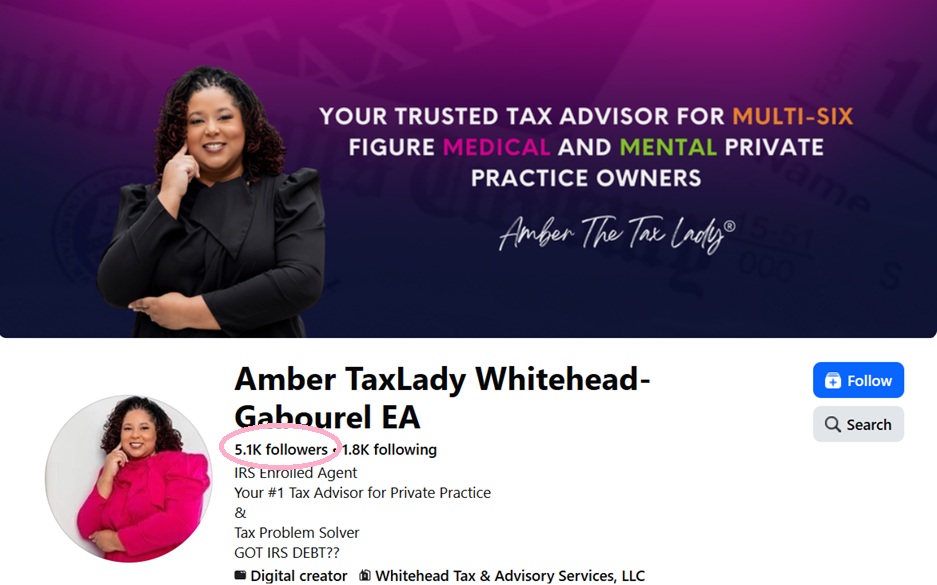
Meet Amber TaxLady "The Tax Lady" she shows the power of creating a memorable personal brand, using live videos and practical tax education to position herself as the trusted expert people think of before tax season even begins.
X (Formerly Twitter)
X is one of the best platforms for accountants who enjoy sharing ideas, industry insights, and timely commentary. The audience includes business owners, founders, investors, finance professionals, and other accountants looking for practical advice and discussion.
It works particularly well for tax updates, reactions to new legislation, accounting trends, quick financial tips, and thought leadership. Short posts are often enough to start meaningful conversations, especially during tax season or when major regulatory changes are announced.
Unlike LinkedIn, where polished professional posts tend to perform well, X rewards consistency, personality, and engagement. Replying to other professionals, joining industry conversations, and sharing your perspective can help expand your reach just as much as publishing original content.
Here's an example of an accountant building a strong presence on X:
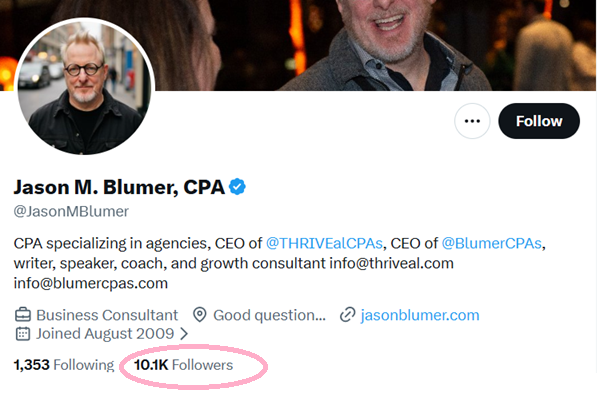
Jason M. Blumer, CPA – Jason demonstrates that accountants can build a loyal audience by sharing insights about leadership, entrepreneurship, firm ownership, and the future of accountingnot just tax advice.
Social Media Strategy for Accountants
The most effective social media strategies start with positioning.
Before you decide what to post, decide who you want to be known for helping and why someone should choose you over every other accountant. Research from the Content Marketing Institute consistently shows that the most successful marketers are more likely to have a documented strategy than their peers
Before creating content, answer these questions:
- Who do you want more of?
- Which services are most profitable or strategic?
- Which client questions do you answer repeatedly?
- Which industries or niches do you understand best?
- What problems make clients search for help urgently?
- What should people believe about your firm after seeing your content?
The answers should shape your content pillars. For an accounting firm, strong pillars might include:
- Tax deadlines and compliance reminders
- Small business bookkeeping education
- Industry-specific financial advice
- Tax planning and advisory insights
- IRS updates and scam warnings
- Client onboarding and process education
- Firm culture and team credibility
Do not make every post a sales pitch. That gets boring quickly. A practical ratio for accountants is 60% educational content, 20% trust-building content, 10% firm or service content, and 10% direct call-to-action content.
When I build a strategy for a small business through MAE, I start by learning the business first: services, website, social profiles, ideal clients, competitors, and voice. Then I turn that into content pillars and a calendar the owner can review.
Content Ideas That Engage Clients
The best accounting content starts with the questions clients already ask.
Your inbox, client calls, onboarding meetings, and tax-season conversations are already full of content ideas. The same questions appear every day on Reddit, in Facebook groups, and in online communities (Should I hire a CPA or can I do my own bookkeeping? How should I set up my business for taxes? etc)
Deadline Reminders
Many clients miss deadlines because they are busy, not careless.
Examples:
- “Estimated tax payment due soon: what small business owners should review”
- “W-2 and 1099 season is coming: what employers should prepare”
- “Year-end checklist for S corp owners”
- “Quarter-end bookkeeping tasks to finish before the month closes”
Make these posts specific. “Tax deadline reminder” is too broad. “September estimated tax payment reminder for self-employed professionals” is better.
Myth Versus Fact Posts
Accounting is full of half-truths. Social media is a good place to correct them.
Examples:
- “Myth: If you made no profit, you do not need bookkeeping.”
- “Myth: A tax extension means you can pay later.”
- “Myth: Your LLC automatically saves you taxes.”
- “Myth: You only need to talk to your CPA in March.”
Niche-Specific Tips
Niche content attracts better clients because it shows that you understand their world.
Examples:
- “Bookkeeping tips for restaurant owners”
- “Tax planning reminders for real estate agents”
- “What therapists should track before tax season”
- “Cash flow mistakes common in construction businesses”
- “Payroll issues beauty salons should watch closely”
This is where social media becomes much more powerful. A generic post attracts anyone. A niche post attracts the right person.
Behind-the-Scenes and Video Content
People trust people, not only credentials. Useful posts can include a team introduction, your onboarding process, how you prepare for tax season, your firm’s values, or what clients should send before a meeting.
Video can simplify complex topics. Keep it short: one question, one answer, one takeaway. For example: “What should you do if you receive an IRS notice? Do not ignore it, do not panic, and send it to your tax professional before responding.”
Turning Tax Law Changes and IRS Updates Into Timely Content
Tax updates are one of the biggest content opportunities for accountants. Clients often hear about changes from social media, news headlines, or friends before they understand what the change actually means.
Your job is to add context. The IRS provides Tax Tips, e-News for Tax Professionals, scam alerts, and topic updates that can help firms monitor timely issues. You can turn those updates into practical posts without copying government language.
A useful format is:
- What changed
- Who may be affected
- What clients should not assume
- What action may be needed
- When to ask for professional help
For example, if there is an IRS warning about misleading tax advice on social media, your post could say: “Not every viral tax tip is legitimate. Before claiming a credit or deduction you saw online, check whether it applies to your situation. Some false claims can delay refunds or create penalties.”
Accountants should be careful with tax law content. Do not give personalized advice in a public post. Do not promise outcomes. Do not simplify a rule so much that it becomes misleading.
A disclaimer can help, but it does not fix bad content. If a topic is too complex, explain the question clients should ask rather than pretending one answer fits everyone.
Common Mistakes Accountants Should Avoid
Some accounting firms are too cautious. Others are too casual. Both can hurt credibility.
Avoid these mistakes:
- Posting only generic tax tips: Add context, examples, and who the advice is for.
- Disappearing outside tax season: Clients need financial guidance year-round, not only in February and March.
- Sharing client details carelessly: Never reveal sensitive financial information, even in casual examples.
- Making claims that sound too strong: Avoid promises like “guaranteed lower taxes” or “we get the biggest refunds.”
- Treating social media like a brochure: Good social content talks to the client, not only about the firm.
Tax professionals also need to protect client data. The IRS points tax professionals to Publication 4557 and related security guidance for safeguarding taxpayer information.
The AICPA Code of Professional Conduct also warns against advertising or solicitation that is false, misleading, or deceptive.
Instead of posting, “We offer payroll services,” post, “If your payroll tax deposits are late, the penalties can become expensive quickly. Here is what employers should check before running payroll.”
That is more useful and more persuasive.
How MAE Helps Accountants Stay Consistent
When I work with a small accounting firm, I do not just generate random captions. I start by understanding the firm, services, ideal clients, website, brand, and current social presence. Then I help create a strategy, pillars, and calendar.
I can help turn accounting expertise into educational posts, deadline reminders, short videos, visual explainers, carousel posts, captions, content calendars, and client-friendly topic ideas.
The owner still stays in control. Every piece of content is presented for review and approval before publishing, so the firm can correct details, adjust tone, and protect its standards.
For accountants, that approval step is important. Accuracy, voice, and professional judgment matter.
MAE should not replace your expertise. I help package it, organize it, and keep it visible.
Common FAQ We Get
Is social media really worth it for accountants?
Yes, if you use it to build trust and educate clients. Social media helps accountants stay visible before prospects are ready to hire.
What should accountants post on social media?
Post deadline reminders, tax tips, bookkeeping advice, IRS updates, client checklists, and niche-specific guidance for the industries you serve.
Which social media platform is best for accounting firms?
LinkedIn is usually best for business clients and advisory services. Facebook works well for local firms, while Instagram is useful for simple visual education.
How often should an accounting firm post?
Start with 2 to 3 posts per week. Consistency matters more than volume, especially if every post is useful and professionally written.
Can accountants give tax advice on social media?
Accountants can share general education, but they should avoid personalized advice in public posts. Complex tax issues should always lead to a private consultation.